
A new generation’s commitment to the environment is taking root in the Itata Province. More than 300 native trees have been planted in the Altos de Ninhue area through the joint efforts of students, environmental organizations and public institutions. The initiative aims to restore native forests and protect the region’s natural heritage.
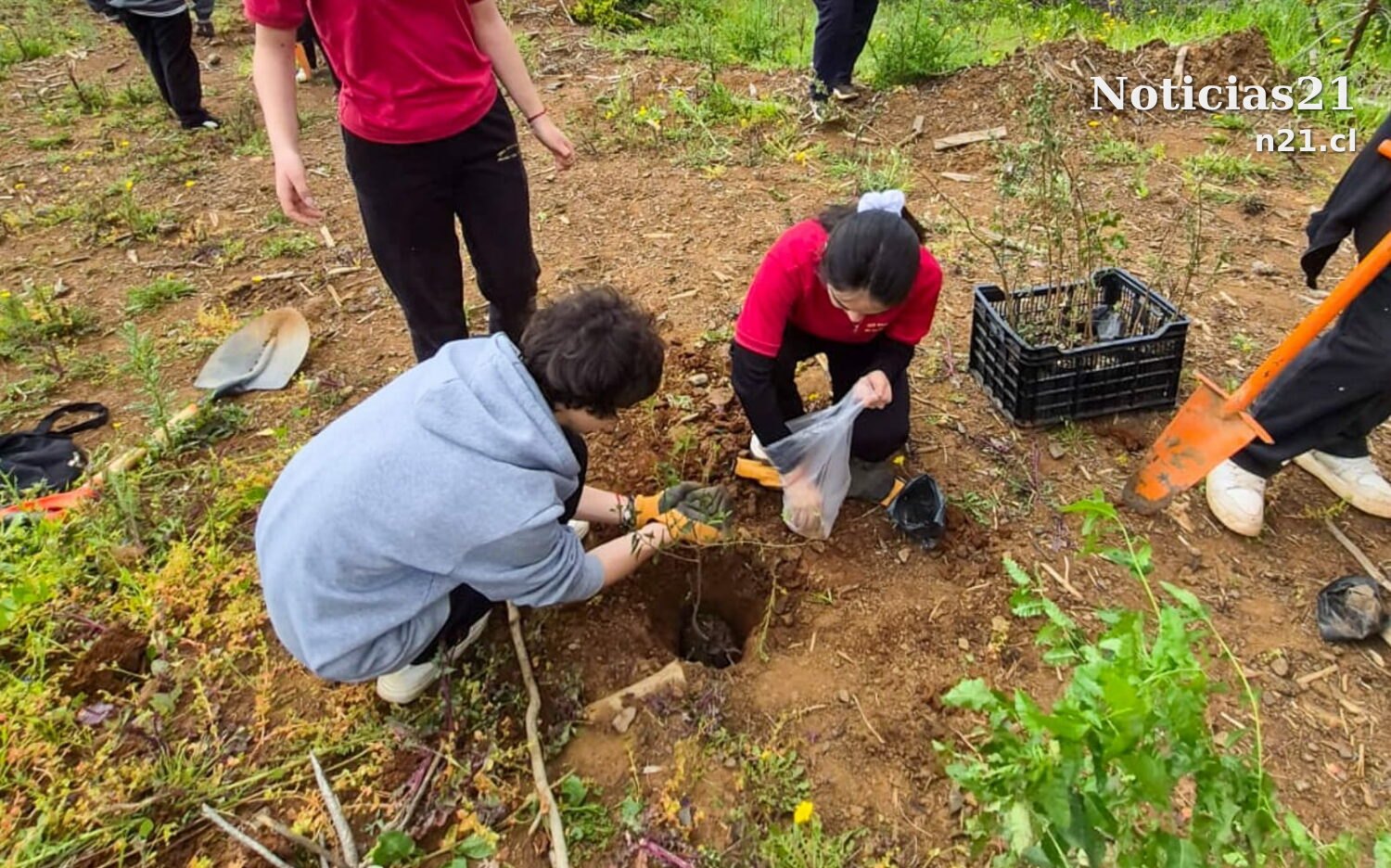
The most recent activity took place on Tuesday, October 27, at Fundo Curahuén, in the commune of Ninhue. First- and second-year high school students from the forestry program at Liceo Bicentenario Arturo Prat Chacón took part in planting approximately 120 native trees.
The species included quillay, peumo, litre, huingán, espino and corcolén, all characteristic of the sclerophyllous forests of Ñuble’s dryland interior. These native plants play an important role in preserving biodiversity and protecting the soil.
Young People in Ñuble Committed to Their Territory
Students from Liceo Bicentenario de Excelencia Carlos Montané Castro in Quirihue have also participated in the initiative. On October 13, they joined a reforestation activity, planting approximately 120 additional native trees.
These activities are part of the fourth volunteer cycle of the GEF Landscape Restoration Project, which seeks to involve educational communities in the environmental recovery of their own territories.
The work includes the participation of Fundación Santuario Curahuén and the support of the NGO Núcleo Nativo, which provided the plants used in the most recent activity.
Restoring Native Forests to Address Climate Change
The restoration of these areas involves much more than increasing the number of trees. Native vegetation plays an essential role in ecosystem conservation, soil protection and biodiversity, particularly in rural areas exposed to drought and the effects of climate change.
Ñuble Regional Environmental Secretary Angélica Cuevas Palominos highlighted the importance of sustained efforts involving local communities to restore ecosystems and strengthen the region’s ability to adapt to climate change.
From an educational perspective, María de los Ángeles Tapia Romero, the teacher in charge of the Ecology and Environment Workshop at Liceo Arturo Prat Chacón, praised the experience as an opportunity for students to apply their knowledge and take an active role in protecting their surroundings.
A Project Involving Several Communities
The GEF Landscape Restoration Project operates in two priority areas in the Ñuble Region. The first is Altos de Ninhue, covering parts of Ninhue, Quirihue, San Nicolás and San Carlos. The second is the area surrounding Cerro Cayumanque, including parts of Quillón and Ránquil, as well as Florida in the Biobío Region.
The initiative is funded by the Global Environment Facility (GEF), implemented by the Food and Agriculture Organization of the United Nations (FAO), and carried out by Chile’s Ministry of the Environment together with CONAF. The project runs from 2023 to 2028.
Ñuble’s Future Is Also Being Planted Today
The participation of students from Ninhue and Quirihue demonstrates the important role educational communities can play in protecting the region’s natural heritage.
Restoring native forests requires continuity, care and monitoring to ensure that planted trees survive and grow. These activities, however, already send a positive message: young people are not only learning about the environment in the classroom, but also taking part in building a more sustainable region.
Because protecting Ñuble also means protecting its forests, its biodiversity and the future of generations to come.