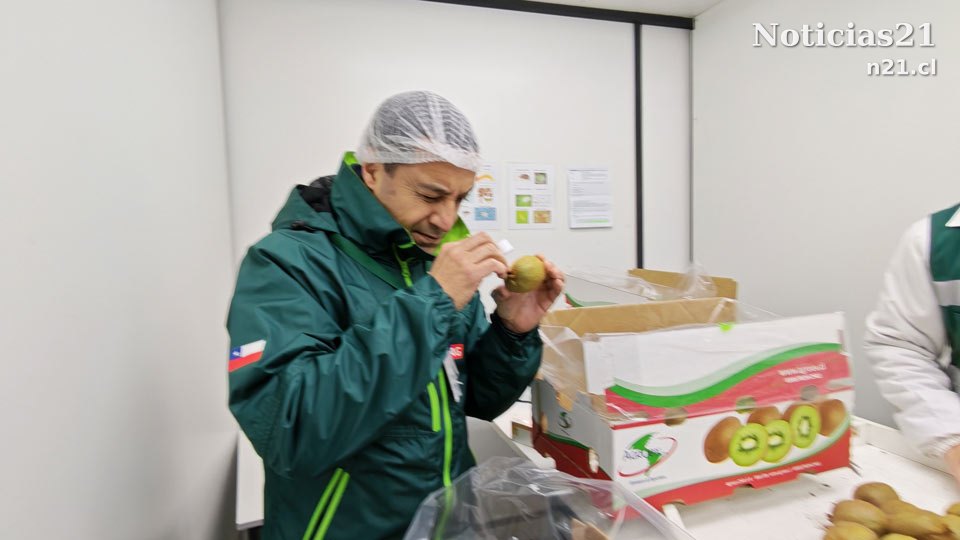


Ñuble is demonstrating that its agricultural production has the potential to reach international markets. The work of farming cooperatives, the quality of their products and the strength of collaboration are opening new business opportunities that could strengthen rural economies and generate higher incomes for farming families.
Between October 26 and 30, the 2026 Business Week for Family Farming Cooperatives took place in the Ñuble Region, bringing together 35 cooperatives and farmer-led businesses from different regions of Chile with domestic buyers and importers from China, Mexico and the United States.
The initiative was organized by INDAP, the Division of Cooperatives and Associativity (DAES), ProChile and the Ñuble Regional Government.
Wines from the Itata Valley Have Already Reached China
One of the most significant achievements of this strategy was the export of more than 17,000 bottles of wine from the Itata Valley to China, in a transaction valued at more than CLP $100 million.
This experience has attracted further international interest. A Mexican importing company is currently working on importing approximately 10,000 additional bottles.
During the business agenda, international buyers visited local vineyards and discovered nearly 30 wine labels produced by more than 20 winemakers from the Itata Valley, highlighting the region's heritage grape varieties and winemaking identity.
San Carlos Honey Also Looks Toward International Markets
Another highlight was the visit to the Punilla Beekeepers Cooperative in San Carlos, where international buyers toured its honey harvesting and processing facility, which has recently obtained infrastructure suitable for export operations.
The program also included a visit to the SOCRADEX berry processing and export plant, where opportunities to market organic raspberries produced by INDAP-supported farmers were explored.
The visitors also learned about local beef and oat production initiatives.
Cooperatives Expand into Supermarkets and School Meal Programs
Commercial opportunities are not limited to exports. In the domestic market, four fruit and vegetable suppliers from Ñuble were added to the supplier registry of supermarket chain Tottus, opening opportunities to supply five stores in Chillán, Concepción, Talcahuano and Los Ángeles.
Additionally, five suppliers from Ñuble and two others from the Biobío and Araucanía regions established commercial agreements with school food concessionaire Alicopsa.
Between August 2025 and September 2026, some of these businesses achieved cumulative sales of up to CLP $200 million per supplier.
The Second International Business Roundtable for Family Farming Cooperatives, held in Chillán, also brought together representatives from Walmart Chile, Alicopsa, Soser, hotels, restaurants and institutional buyers.
Strengthening Rural Economies: The Next Challenge
Claudia Parra, acting regional director of INDAP Ñuble, emphasized that the initiative aims to create new market opportunities for family farming by connecting producers and cooperatives with domestic and international buyers.
Over five days, the program also featured training sessions, technical meetings, seminars and business discussions covering cooperative management, public procurement, associative business models and the requirements for entering international markets.
Family farming accounts for approximately 90% of Chile's agricultural holdings and generates around 60% of the country's agricultural workforce.
In a region such as Ñuble, where agriculture is deeply connected to its economic and territorial identity, these initiatives represent an opportunity to strengthen farming organizations, create jobs, improve family incomes and sustain production in rural communities.
The challenge now is to turn these business meetings into lasting commercial agreements and help more farmers become part of national distribution and international export chains.
Ñuble has agricultural traditions, products with a strong territorial identity and productive capacity. The next step is to turn that potential into better opportunities for the people who work the land and greater development for rural families throughout the region.