The history of Ñuble is also rooted in its Indigenous heritage. With this in mind, Gerardo Sandoval Aguilera, a native of Quirihue and doctoral candidate in American History at the University of Salamanca, Spain, is conducting research to reconstruct the presence and experiences of Indigenous communities in the former Itata District during the 18th century.
His research explores the mechanisms of control imposed on Indigenous populations, including the frontier encomienda system, the relocation of Indigenous people from different territories, the establishment of Indigenous towns and the processes that affected their lands and forms of organization.
The study examines the estates where encomenderos held Indigenous tributaries from Itata, as well as population transfers from territories known as Tierra Adentro and migrations from places as distant as Chiloé in the south and Coquimbo in the north.
Another important aspect is the study of Indigenous towns, their geographical location and their development throughout the 18th century. The research also considers population registers, disputes involving Indigenous leadership, proposals to consolidate communities into a single settlement, and the expropriation of Indigenous lands.
Sandoval also examines the establishment of Spanish settlements and their role in territorial organization and in maintaining control over both Spanish and Indigenous populations.
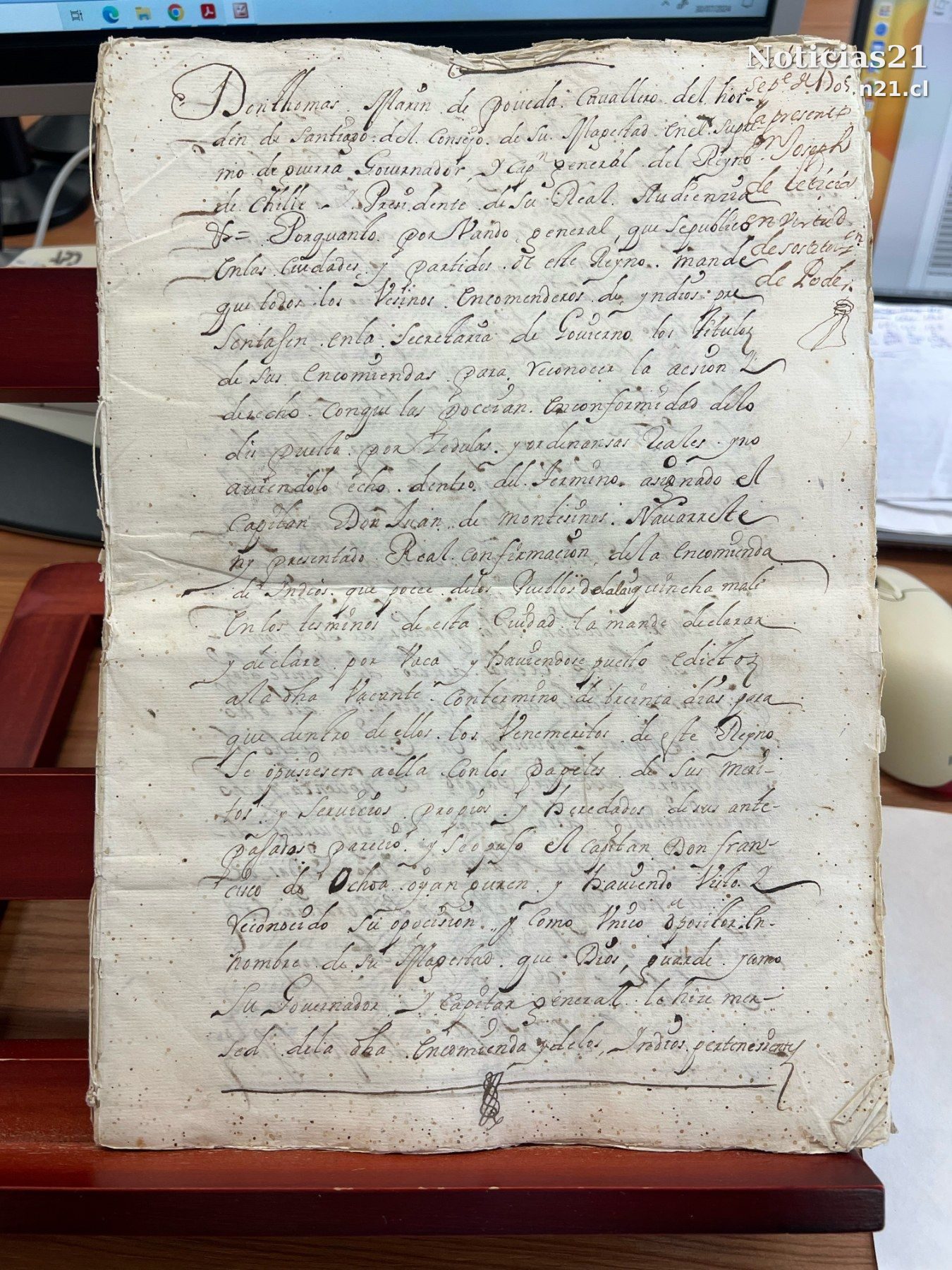
To carry out this research, Sandoval has consulted historical documents from the General Archive of the Indies in Seville, Spain, and the National Archive of Chile in Santiago.
Among the historical records is a document from 1699 concerning the Indigenous settlements of Quinchamalí and Lala, located in the former Itata District and preserved in the General Archive of the Indies, Volume 118.
This research offers an opportunity to bring greater attention to a part of regional history that deserves recognition, helping us understand the origins, transformations and historical memory of Ñuble's communities.
The history of our communities is also written in the archives. Understanding it is part of building our identity.